
Spaced Repetition and FSRS, Explained
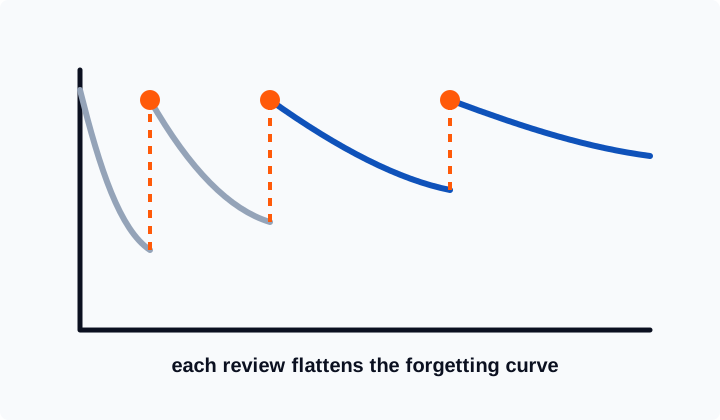
Spaced repetition is one of the best-supported techniques for remembering things over the long term. The idea is simple: review information just before you would forget it, and space reviews further apart as the memory gets stronger. Puzji Recall schedules reviews with FSRS, a modern open-source algorithm. This article explains the ideas behind it in plain terms.
Forgetting is predictable
In the 1880s, the psychologist Hermann Ebbinghaus measured how quickly he forgot lists of nonsense syllables. Memory dropped steeply at first and then levelled off, a pattern now called the forgetting curve. Later research found the same shape again and again, and found something more useful: each successful review makes the curve flatter, so the memory lasts longer before the next review is needed.
That gives a strategy. Review a new fact after a short gap, then a longer one, then longer again. Each review takes a few seconds, but because the gaps grow, a card you know well might only appear a few times a year.
Why active recall matters
How you review matters as much as when. Rereading notes feels productive because the material looks familiar, but recognising something is easier than producing it. Active recall means trying to bring the answer to mind before you see it, which is exactly what a flashcard asks you to do.
Studies of the testing effect show that retrieving an answer strengthens memory more than reviewing it again. Struggling a little is part of the benefit, so a good review schedule aims for reviews that are challenging but usually successful.
From fixed rules to a memory model
Early spaced repetition software used fixed rules. The well-known SM-2 algorithm from 1987 multiplies the interval by an “ease factor” after each review and adjusts that factor when you find a card hard or easy. It works, but the rules were hand-tuned, and they often show difficult cards too rarely or easy cards too often.
FSRS, the Free Spaced Repetition Scheduler, takes a different approach. Instead of fixed rules, it uses a model of memory with parameters fitted to real review histories, and it predicts how likely you are to remember each card on any given day.
The three numbers FSRS tracks
For every card, FSRS keeps an estimate of three properties of your memory.
- Retrievability: the probability that you could recall the card right now. It falls over time since your last review
- Stability: how long it takes for retrievability to fall to 90%. A stable memory fades slowly
- Difficulty: how hard this card is for you, which controls how much each review increases stability
How the next review date is chosen
You set a desired retention, the chance of remembering that you are aiming for. FSRS commonly defaults to 90%. When you review a card, FSRS updates its stability and difficulty from your answer (again, hard, good or easy) and from how long it had been since the last review. It then schedules the next review for the day when predicted retrievability will drop to your desired retention.
Two consequences follow. A successful review after a long gap raises stability more than one after a short gap, so the system rewards remembering something that was close to being forgotten. And forgetting a card does not reset it to zero: its stability drops, but the history still counts.
Desired retention is a real trade-off. Aiming for 95% means many more reviews for a small gain, while 80% means fewer reviews but more forgotten cards. Around 85 to 90% suits most learners.
Making your cards work
The best scheduler cannot rescue a poor card. These habits make reviews faster and memories stronger.
- Ask one thing per card: “What is the Japanese word for river?” rather than a list of five words
- Write the question so the answer is unambiguous, and add context when a word has several meanings
- Add audio or an example sentence for language cards, so you learn usage, not just translation
- Answer honestly: pressing “good” on a card you guessed teaches the scheduler the wrong thing
- Review a little every day rather than in long sessions once a week
Where Puzji Recall fits
Puzji Recall combines FSRS scheduling with active recall flashcards, quick study sessions and quiz games, and it can import existing Anki decks so you can keep studying material you already have. It is free to start, and it works in the browser.
Related service: Product engineering and MVP development
Have a product or automation challenge?
Share the business goal with Puzji and we will help identify a practical product, AI, integration, or cloud delivery path.
Plan the next step